
-
Autumn Planting Bulbs
- Autumn Planting Bulbs
- Plant in autumn for spring colour.
-
 Alliums
-
 Tulips
-
 Narcissus & Daffodils
-
 Hyacinths & Muscari
-
 Anemones
-
 Ranunculus
-
 Crocus & Saffron Crocus
-
 Naturalising & Interesting Bulbs
-
 Fritillaria
-
 Camassia
-
 Iris
Iris
-
Bare-Root Perennials
- Bare-Root Perennials
- Garden-ready perennials for every border, season and growing condition.
-
 Sun & Pollinators
-
 Shade & Woodland
-
 Cottage Garden & Cut Flowers
-
 Ground Cover & Long Flowering
-
 Foliage & Containers
-
 Late-Summer & Autumn Colour
-
 Winter & Early Spring
-
 Moist Soil & Structure
-
Shop by Solution
- Shop by Solution
- Find the right varieties for the place or purpose.
-
 For Pots & Containers
-
 For Borders
-
 For Naturalising
-
 For Cut Flowers
-
 Pollinator Friendly
-
 Underplanting Trees & Shrubs
-
 Rockeries & Gravel Gardens
-
Woodland & Shade
-
 RHS Award Winners
-
 Fragrant


Anemone 'Royal Blue' (Wood Anemone)
Delivery August/September
Available for delivery in August/September, when the autumn planting season begins.
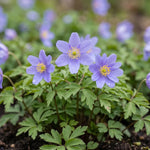
Anemone nemorosa ‘Royal Blue’ is a quietly exquisite woodland anemone, offering refined lavender-blue flowers with a neat yellow eye from March to May. Low, carpeting and naturally graceful, it slips effortlessly beneath shrubs and deciduous trees, softening the spring garden with an understated, blue-toned haze.
Once flowering has finished, the plant retreats and becomes dormant, leaving space for later companions—an elegant choice for layered planting in shady borders and woodland-style schemes. Given time, it settles in and forms a pleasing colony for naturalistic drifts.
- Spring colour in shade — lavender-blue blooms with a fresh yellow centre
- Ideal for naturalising — rhizomatous habit suits woodland planting and underplanting
- Easy and dependable — fully hardy, and best in humus-rich, moist but well-drained soil
| Botanical name | Anemone nemorosa 'Royal Blue' |
| Flower colour | Lavender-blue petals with yellow centre |
| Bulb size | N/A (rhizome) |
| Established height | 10–50cm |
| Established spread | 10–50cm |
| Plant spacing | 10–15cm |
| Leaf colour | Dark green |
| Habit | Dwarf, rhizomatous; spring-flowering then dormant |
| Life cycle | Perennial |
| Hardiness | Fully Hardy |
| Years to establish | 2–3 years |
| Sunlight | Partial Sun |
| Position | Borders, woodland gardens, under shrubs and deciduous trees |
| Suitable for | Naturalising, Underplanting, Cottage & informal gardens, Shady borders |
| Soil acidity | Any |
| Soil moisture | Moist but well-drained |
| Soil type | Humus-rich |
| RHS Award (AGM) | No |
| Growing skill | Easy |
| Pollinator-friendly | Yes |
| Deer resistant | No |
Planting and Flowering Calendar
Key Features
Packed in paper
Packed peat-free
Great for Shade
Attracts wildlife
Good for cutting
Naturalising

The Finest Bulbs
We partner with elite growers to provide only top-size, professional-grade bulbs. Bigger bulbs mean stronger roots and more spectacular blooms.

A Greener Thumb
We are committed to a healthier planet, using sustainable growing practices and mindfully chosen, recyclable packaging.

An Unrivaled Selection
Discover an extensive collection of both timeless classics and rare, exclusive varieties to create a garden that is uniquely yours.

Our Bloom Guarantee
If a bulb or plant fails to perform in its first growing season after the care instructions have been followed, we will normally offer a replacement or store credit for the affected item. This does not affect your statutory rights.
Kind Words from Our Gardeners
Arrived quickly and well-packaged. Planted them in some pots on the patio and they all came up. Look beautiful. Thank you!
Careane Wallace
The bulbs arrived beautifully packaged and you could just tell they were excellent quality. We had the most wonderful display of daffodils this spring on our patio. Simply stunning. Will definitely be ordering again
David P
I ordered the mixed hyacinth collection and the scent in my garden this April was absolutely heavenly. Every single bulb produced a strong, beautiful flower and the colours were stunning together. A fantastic purchase, I'll be back for more next year!
Eleanor R
Somerset